Things to Do in Estonia: The Ultimate Travel Guide
A country of medieval towns, more than 2,000 islands, ancient bogs and endless summer light. Here is the very best of Estonia, from people who live and sail here.
📋 15 ideas📍 Tallinn & around🗓 Updated 2026
Quick answer
The best things to do in Estonia are exploring medieval Tallinn, hiking the bogs and manor houses of Lahemaa National Park, island-hopping to Saaremaa, Hiiumaa and Naissaar, and experiencing the country's sauna and summer-sailing culture. A week lets you combine the capital, a national park and at least one island.
✓Tallinn's Old Town, Lahemaa National Park and the islands are the top draws.
✓Estonia has 2,000+ islands — Saaremaa, Hiiumaa, Muhu and Naissaar lead the list.
✓Bog-boardwalk hikes and baroque manor houses are uniquely Estonian experiences.
✓Summer (May–September) is best; it is the only season for island ferries and sailing.
✓Naissaar is the easiest island day-trip, reachable by boat straight from Tallinn.
Estonia packs an improbable amount into a small country: a fairy-tale medieval capital, more than 2,000 islands, vast forests and primeval bogs, manor houses, sandy coasts and some of the cleanest air in Europe. And yet most visitors see only Tallinn’s Old Town and leave thinking they have seen Estonia.
This guide goes much wider. It covers the highlights that genuinely earn their reputation, then the islands, national parks and seaside corners that make the country special — with honest notes on how to reach each, how long to give it, and whether it is worth the detour.
A few entries are ours: the sailing trips we run from Tallinn, which are the easiest and most beautiful way to start (or end) any Estonian journey.
Medieval quarter · free to wander · Tallinn, half a day+
Tallinn Old Town
Estonia’s crown jewel is one of Europe’s best-preserved medieval town centres, a UNESCO World Heritage Site since 1997. Cobbled lanes wind past 15th-century merchant houses, Gothic spires and the pastel façades of Town Hall Square (Raekoja plats), all still ringed by roughly two kilometres of surviving stone city wall and defensive towers.
Wandering the streets costs nothing, so budget your euros for the paid highlights: climb the Town Hall tower or the wall towers, ride up to the Kohtuotsa and Patkuli viewing platforms on Toompea hill for the classic red-roof panorama, and duck into St. Olaf’s Church tower for the best view of all. Come early morning or after the day-trippers leave to have the lanes largely to yourself.
UNESCO-listed; walking the streets is free
Getting there: 15-min walk from the ferry terminals or Baltic Station
Tip: Toompea’s Kohtuotsa platform is the top photo spot — go at golden hour
Best May–September; atmospheric (and cold) during the December Christmas market
Estonia’s largest and oldest national park sprawls across forests, bogs, and a rugged coast of erratic boulders an easy hour east of Tallinn. Its signature short walk is the Viru Bog trail (Viru raba) — a wide boardwalk that floats across a raised bog dotted with black pools and stunted pines, leading to an observation tower.
The core boardwalk-and-tower route is 3.5 km (or a 5.5 km loop) and completely free. Pair it with the seaside “captains’ village” of Käsmu, once notorious for smuggling, now home to a charming maritime museum and a boulder-strewn shore. Manor houses at Palmse and Sagadi round out a full day.
Free entry; Viru boardwalk 3.5 km (5.5 km full loop)
Getting there: ~1 hr drive from Tallinn; some buses stop near the trailhead
Tip: the boardwalk to the tower is buggy- and wheelchair-friendly
Best late summer for cloudberries; autumn for colour
Wetland wilderness · free park; guided canoe from ~€40 · SW Estonia, 1–2 days
Soomaa National Park & the “fifth season”
Soomaa (“land of bogs”) is Estonia’s wild heart of raised bogs, flood-meadows and slow rivers. It is famous for its “fifth season” — the spring flood, usually late March to April, when meltwater can rise several metres and up to 17,500 hectares of forest, roads and meadows can only be crossed by canoe.
Outside flood season, strap on bogshoes to squelch across the spongy moss, or paddle a traditional dugout canoe. The Riisa and Beaver study trails start near the visitor centre and are pram-friendly. Guided fifth-season canoe trips typically start around €40–€50; going alone across the flooded, disorienting landscape is not advised.
Park entry free; guided canoe tours from ~€40 per person
Fifth season peaks late March–April; timing varies year to year
Getting there: ~2 hr drive from Tallinn via Pärnu; own transport easiest
Tip: check water levels with the RMK visitor centre before you travel
University city · free to explore · SE Estonia, 1–2 days
Tartu
Estonia’s intellectual capital and second city was a European Capital of Culture in 2024, and its creative energy lingers. The University of Tartu, founded in 1632, anchors an elegant centre of neoclassical buildings, leafy Toome Hill, and a Town Hall Square that tips gently toward the Emajõgi River.
The interactive AHHAA Science Centre is the largest in the Baltics and a hit with families. Explore the mural-covered wooden districts of Karlova and Supilinn (“Soup Town”), take a river cruise on the historic barge Jõmmu, and eat well — Tartu now has Michelin-recognised restaurants. Regular buses from Tallinn take about 2.5 hours.
Exploring the old town is free; AHHAA around €15
Getting there: ~2.5 hr bus or train from Tallinn
Tip: wander Supilinn and Karlova for street art and cafés
Best May–September; lively student atmosphere in term time
Pärnu is Estonia’s “summer capital,” a genteel spa town wrapped around a long white-sand beach on the shallow, warm Gulf of Riga. Belle-époque villas, a wooden beach promenade and the historic mud-bath spa give it a relaxed, old-fashioned holiday feel.
The wide sandy beach is free and gently shelving — ideal for families — and the town buzzes with festivals, terrace cafés and spa hotels through July and August. It sits on the main Tallinn–Riga route, about a 1.5–2 hour bus ride from Tallinn, making it an easy add-on to any south-bound trip.
Free public beach; spa/wellness packages vary widely
Getting there: ~1.5–2 hr bus from Tallinn
Tip: visit in July for the warmest sea and festival season
Best June–August; quiet and spa-focused off-season
Largest island · ferry from ~€4 foot passenger · W Estonia, 2–3 days
Saaremaa
Estonia’s biggest island is a slow-travel idyll of juniper heaths, windmills, spa hotels and the moated Kuressaare Episcopal Castle — the best-preserved medieval fortress in the Baltics. The island trades in home-brewed beer, black bread and a distinctly unhurried island pace.
Reach it via the Virtsu–Kuivastu ferry (to Muhu, then a causeway to Saaremaa); the crossing takes about 27 minutes with 19+ daily sailings, and foot-passenger tickets start around €4. In summer, book vehicle tickets ahead — a 20% surcharge applies to cars leaving the mainland on Friday afternoons and returning on Sundays.
Ferry Virtsu–Kuivastu ~27 min, from ~€4 on foot; book cars ahead in summer
Getting there: ~2.5 hr drive from Tallinn to Virtsu, then ferry
Tip: base yourself in Kuressaare and day-trip to Kaali, Angla and Panga
Second-largest island · ferry ~1 hr 15 min · W Estonia, 2 days
Hiiumaa
Quieter and quirkier than its big sister, Hiiumaa is prized for its self-deprecating island humour, empty beaches and pine forests. Its crowning sight is the Kõpu lighthouse, one of the oldest still-working lighthouses in the world, dating to the early 1500s.
The Rohuküla–Heltermaa ferry from near Haapsalu runs the crossing in roughly 1 hour 15 minutes. You can climb Kõpu’s squat stone tower in the warmer months for a fee, and a single combined ticket covers all three of the island’s lighthouses. Rent a bike or car — sights are spread out and public transport is thin.
Ferry Rohuküla–Heltermaa ~1 hr 15 min
Kõpu lighthouse open in the warm season; small entry fee
Getting there: ~1.5 hr drive from Tallinn to Rohuküla, then ferry
Island · ferry ~27 min · gateway to Saaremaa, half a day
Muhu & Koguva village
Little Muhu sits between the mainland and Saaremaa, linked to both by ferry and causeway, and it rewards a stop rather than a drive-through. Its treasure is Koguva, one of the best-preserved traditional villages in Estonia, a cluster of thatched cottages, stone walls and moss-covered wells.
The open-air Muhu Museum centres on the Tooma farm, birthplace of writer Juhan Smuul, and displays the island’s vivid folk costumes and farm architecture. Muhu is also home to the acclaimed Pädaste Manor. As the ferry from Virtsu lands here first (~27 min), it’s a natural first taste of island life.
Reached via the Virtsu–Kuivastu ferry (~27 min)
Koguva is one of Estonia’s best-preserved village ensembles
Tip: combine Muhu with Saaremaa — a causeway links the two
Winter & lake resort · free trails · SE Estonia, 1–2 days
Otepää
Set in the rolling, forested uplands of the south, Otepää is Estonia’s “winter capital” — home to the world-class Tehvandi Sports Centre and cross-country and biathlon trails that host international competitions. Snow permitting, it’s the country’s best base for Nordic skiing.
In summer the same terrain becomes running, cycling and hiking trails, while Lake Pühajärv (“Holy Lake”) draws swimmers, kayakers and picnickers to its wooded shores. Try the easy Murrumetsa loop around the lake, or visit for open-air music festivals like Leigo. It’s about a 2.5-hour drive from Tallinn.
Free nature trails; ski passes and gear rental extra in winter
Getting there: ~2.5 hr drive from Tallinn (near Tartu)
Tip: Lake Pühajärv is lovely for a summer swim and lakeside walk
Best: Jan–Mar for snow, Jun–Aug for lakes and festivals
Seaside spa town · free promenade · W coast, half a day+
Haapsalu
A dreamy little resort on the west coast, Haapsalu is all wooden lace-trimmed villas, a curative-mud spa heritage, and the romantic ruins of a medieval Episcopal castle whose ghost, the White Lady, supposedly appears on August full-moon nights. The mild, shallow bay made it a favourite of Russian tsars.
Stroll the wooden seaside promenade, admire the fairy-tale railway station (once the longest covered platform in the Russian Empire), and browse for the town’s famously fine knitted Haapsalu shawls. It sits on the road to the Vormsi and Hiiumaa ferries, about a 1.5-hour drive from Tallinn.
Promenade and old town free to explore; castle grounds a small fee
Getting there: ~1.5 hr drive or bus from Tallinn
Tip: gateway to the Rohuküla ferries for Vormsi and Hiiumaa
Best May–September; White Lady legend peaks in August
Lakeside town · free to explore · S Estonia, half a day+
Viljandi
Perched above a glacial lake, Viljandi is a laid-back town of wooden houses, castle ruins and a strong folk-culture streak. The romantic Order castle ruins overlook the lake and a suspension footbridge, and the town is the spiritual home of Estonian traditional music.
Every July it hosts the Viljandi Folk Music Festival, one of the largest folk events in the Baltics, when the small town swells with tens of thousands of visitors. Outside festival week it’s a peaceful stop between Tallinn and Tartu, about a 2-hour drive from the capital.
Free to wander; folk festival tickets sell out fast
Getting there: ~2 hr drive or bus from Tallinn
Tip: time a visit for the July folk festival — but book beds early
Living tradition · UNESCO-listed · nationwide, any season
Estonian sauna culture
Sauna is not a luxury add-on in Estonia — it’s a cornerstone of life, especially the smoke sauna (suitsusaun) of Old Võromaa in the south, added to UNESCO’s list of Intangible Cultural Heritage in 2014. A chimneyless log room is heated for hours until the smoke is let out, leaving a soft, resinous warmth.
Beyond ritual whisking with birch or juniper vihts, sauna is a place of quiet, healing and community. You can try public saunas in Tallinn, farm smoke saunas like Mooska in the south, or floating and creative saunas around the country. It pairs perfectly with a plunge into a cold lake or the sea.
Smoke-sauna tradition of Võromaa is UNESCO-listed (2014)
Public saunas from ~€10–€20; farm smoke-sauna sessions cost more
Tip: bring a swimsuit and be ready for a cold plunge afterwards
Year-round — best after a day outdoors in any season
Estonian cooking is honest, seasonal and rooted in the land: dark rye bread (leib) treated almost with reverence, smoked fish, wild mushrooms and berries, black pudding at Christmas, and marbled sprats on black bread. New Nordic influences have pushed Tallinn and Tartu into the Michelin Guide.
Graze at market halls like Tallinn’s Balti Jaam Market, sip local craft beer and rye kvass, and try Kalev chocolate and the herbal liqueur Vana Tallinn. Island fare adds home-brewed beer and juniper-smoked meats. Casual meals are inexpensive; a proper lunch often runs €10–€15.
Casual lunch ~€10–€15; market stalls cheaper
Must-try: black rye bread, smoked fish, wild-berry desserts
Tip: browse Balti Jaam Market in Tallinn for street food and produce
Seasonal — berries and mushrooms peak late summer to autumn
Just off Tallinn lies Naissaar, a wild, forested island of empty beaches, pine woods and haunting Soviet military ruins — a former closed naval-mine base with a narrow-gauge railway still threading the trees. Public ferries only sail a few times a day, mostly at weekends from May to October, so the island rewards those who arrive on their own keel.
We sail you there directly from Tallinn Bay, dropping anchor in a quiet cove so you step ashore on your schedule, not the timetable’s. Explore the mine depot, the lighthouse and the flower-strewn meadows, then return to the yacht for lunch on deck — a far calmer, more private way to experience Naissaar than the crowded weekend catamaran.
We sail direct from Tallinn — no weekend-only ferry timetable to chase
Bring water and snacks: there are no shops on the island
Tip: ask us about a longer trip combining Naissaar with a swim stop
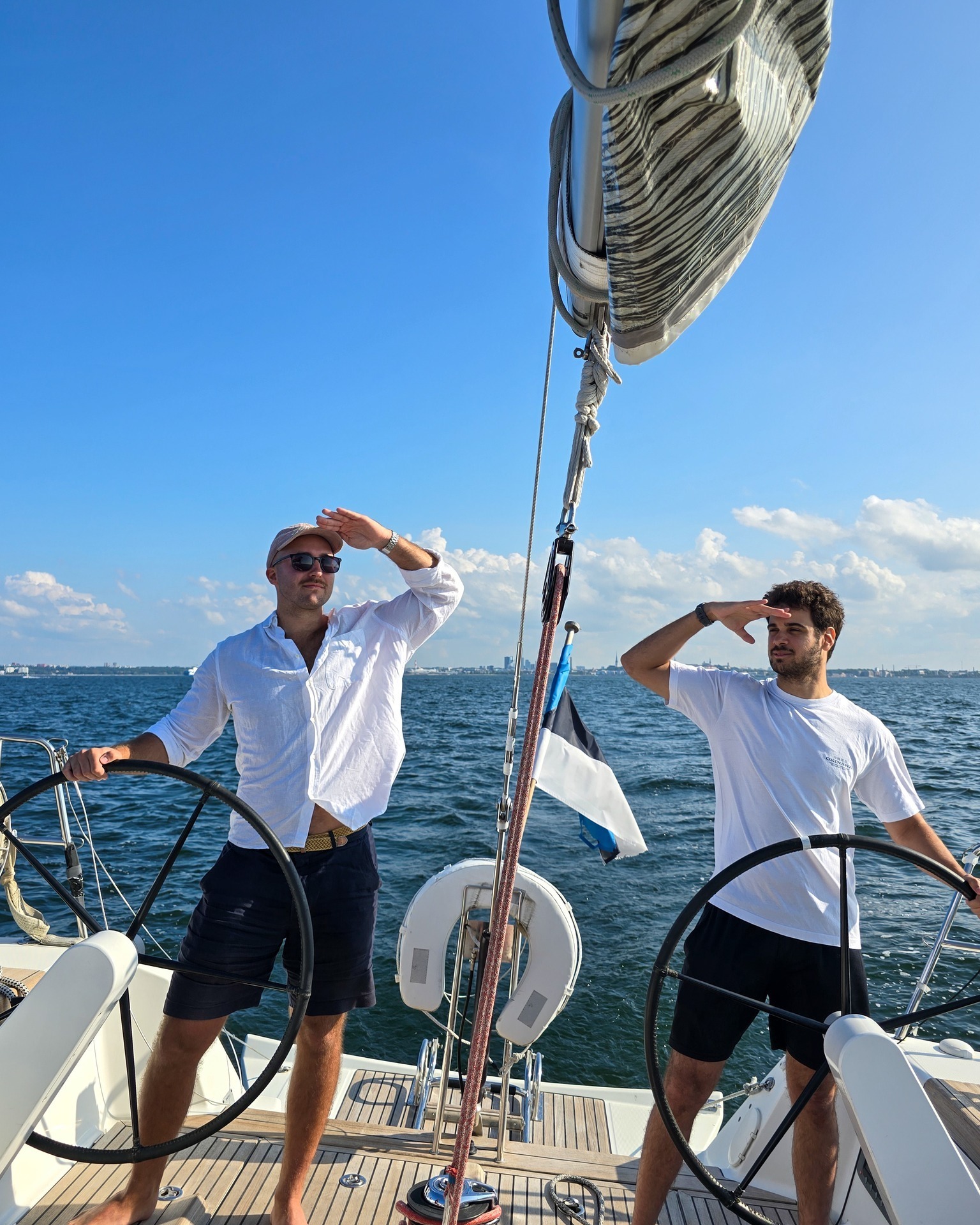
The best view of Tallinn’s medieval skyline isn’t from Toompea — it’s from the water. A sail across Tallinn Bay frames the red roofs and spires of the Old Town against the sea, with the fresh Baltic breeze and the city receding gently behind you.
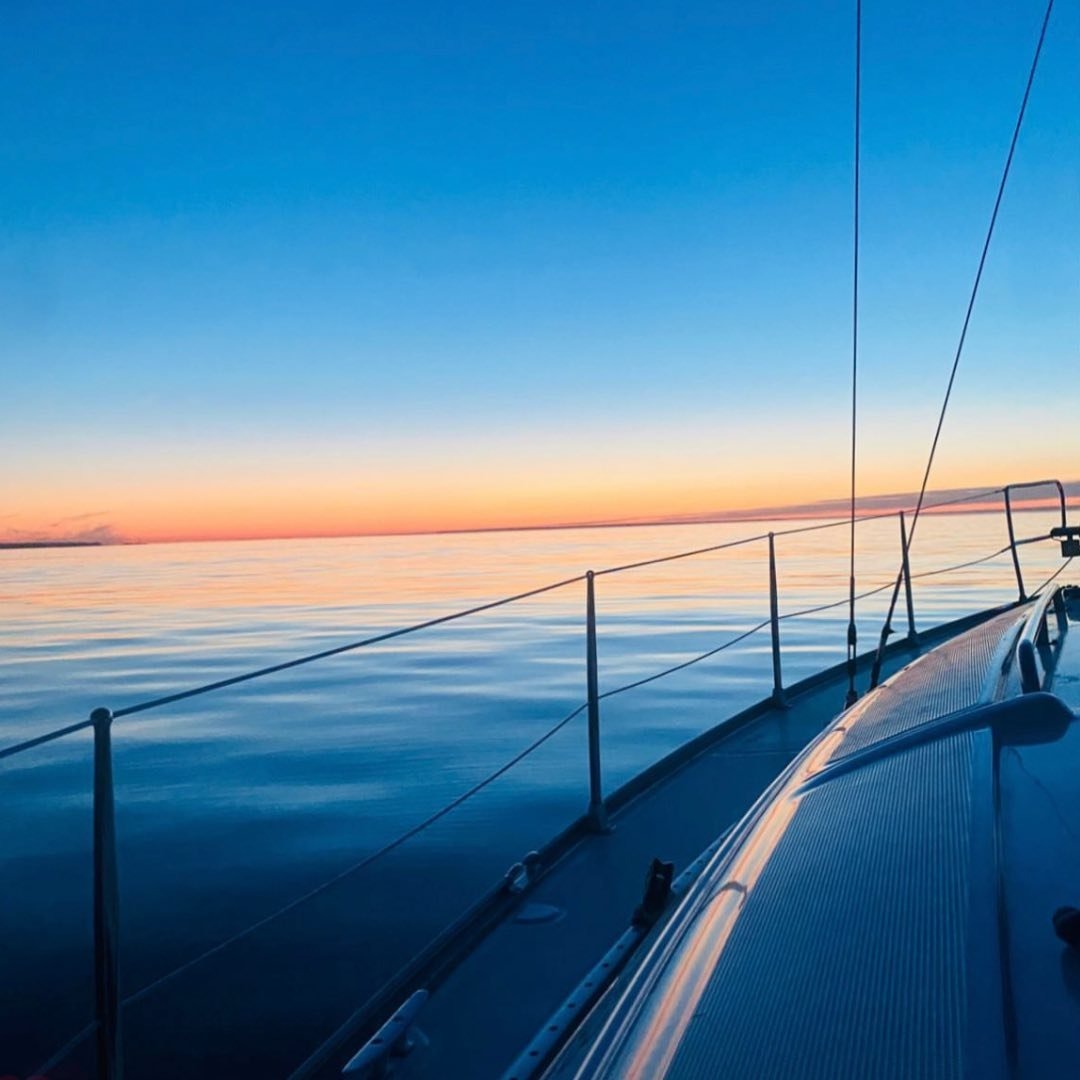
Whether it’s a short afternoon cruise or a golden-hour sunset sail, we handle the ropes while you relax on deck. It’s an effortless way to see the capital from a new angle, spot passing ferries and islands, and swap the cobblestones for open water for a couple of hours.
A relaxed way to see the Old Town skyline from the sea
Great for a short afternoon or sunset sail from central Tallinn
Tip: bring a light layer — it’s always cooler out on the bay
Three to four days covers Tallinn and a national park or a nearby island. A week lets you add a bigger island like Saaremaa or Hiiumaa and travel at a relaxed pace.
What is Estonia best known for?+
Its fairy-tale medieval capital, vast forests and bogs, more than 2,000 islands, a deep sauna culture, and being one of the world's most digital societies.
What are the best islands to visit in Estonia?+
Saaremaa (windmills, cliffs, castle), Hiiumaa (lighthouses, quiet nature), Muhu (thatched villages), and Naissaar — the easiest, reachable by yacht or speedboat straight from Tallinn.
When is the best time to visit Estonia?+
June to August for warm weather, island ferries, long daylight and the sailing season. September is quieter with autumn colour; winter is cold, dark and atmospheric.
How do you get to the Estonian islands?+
Larger islands like Saaremaa and Hiiumaa are reached by car ferry; Naissaar and Aegna by boat from Tallinn. We can take you to Naissaar by sailing yacht or speedboat.
A private sail on Tallinn Bay is the perfect first or last day of any Estonia trip — effortless, beautiful and unforgettable. Tell us your dates and group size and we will plan it.