Over 2,000 islands, from a 30-minute speedboat hop to overnight ferry adventures. Here is which Estonian islands to visit — and exactly how to reach each one.
📋 15 ideas📍 Tallinn & around🗓 Updated 2026
Quick answer
Estonia has over 2,000 islands. The ones worth visiting are Saaremaa (windmills, cliffs and a medieval castle), Hiiumaa (lighthouses and quiet nature), Muhu (thatched fishing villages), Kihnu (living UNESCO culture) and Naissaar — the easiest, reachable by sailing yacht or speedboat straight from Tallinn.
✓Estonia has 2,000+ islands; a handful are genuine destinations.
✓Naissaar and Aegna are the easiest day-trips, straight from Tallinn by boat.
✓Saaremaa and Hiiumaa each deserve at least an overnight.
✓Kihnu is a UNESCO-listed living culture with traditional dress and song.
✓Summer is the only season the island ferries and boats run.
Estonia has more than 2,000 islands, and they range from a wild patch of forest half an hour from Tallinn to large, culturally distinct worlds of windmills, lighthouses and traditional dress. Which ones you choose depends entirely on how much time — and how much adventure — you have.
Here is an honest, practical guide to the Estonian islands worth your time, sorted roughly from closest to Tallinn outward, with exactly how to reach each and how long to give it. The nearest ones, we can take you to ourselves — by sailing yacht or speedboat, straight from the city.
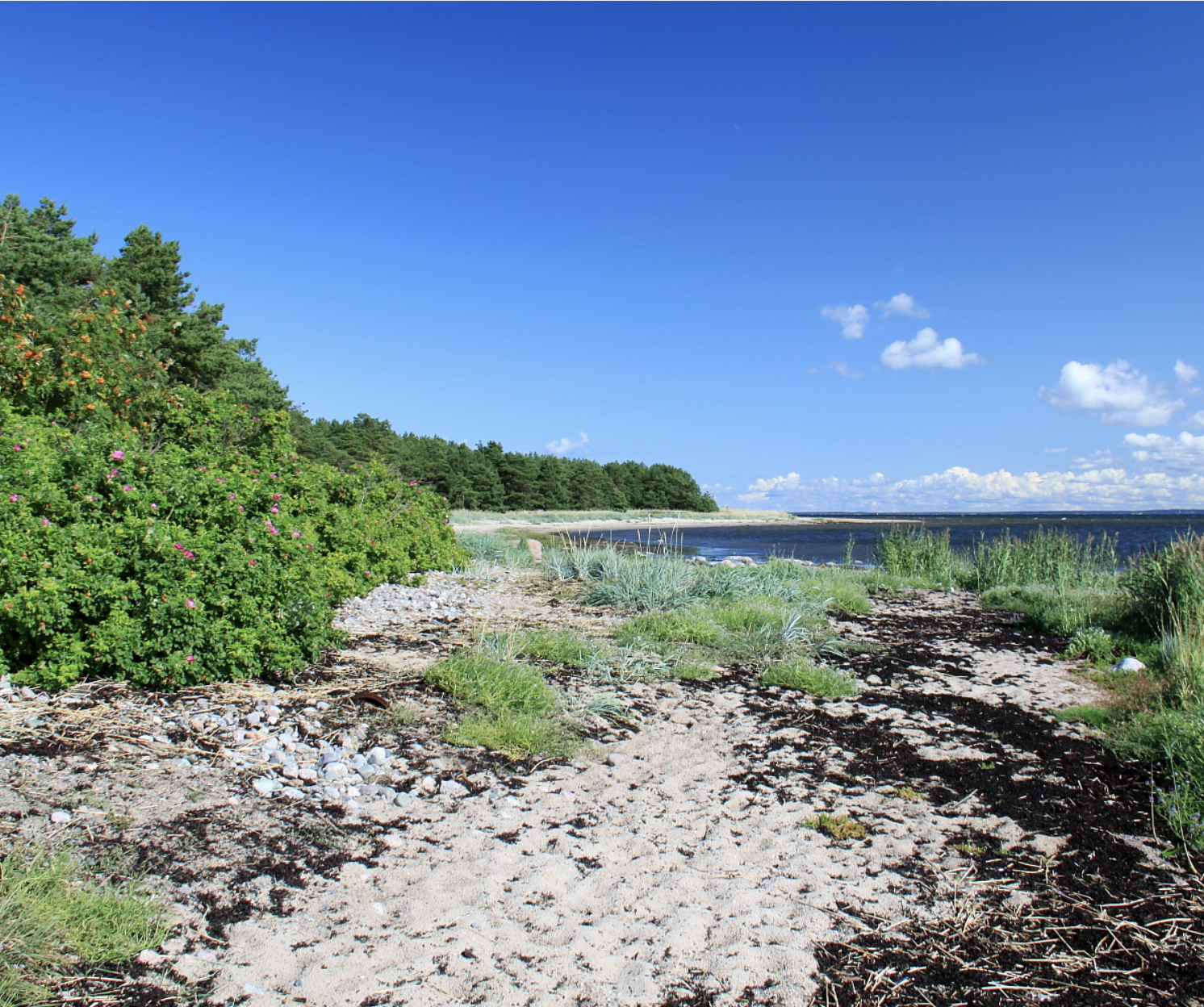
The showpiece of the Tallinn islands, Naissaar (“Women’s Island”) is a 19 km² world of pine forest, sand and startling Soviet military history. Closed as a naval-mine base from 1944 to 1994, it still hides a mine-assembly depot, a narrow-gauge railway, a lighthouse and remnants of Peter the Great’s sea fortress — all now part of a protected nature park.
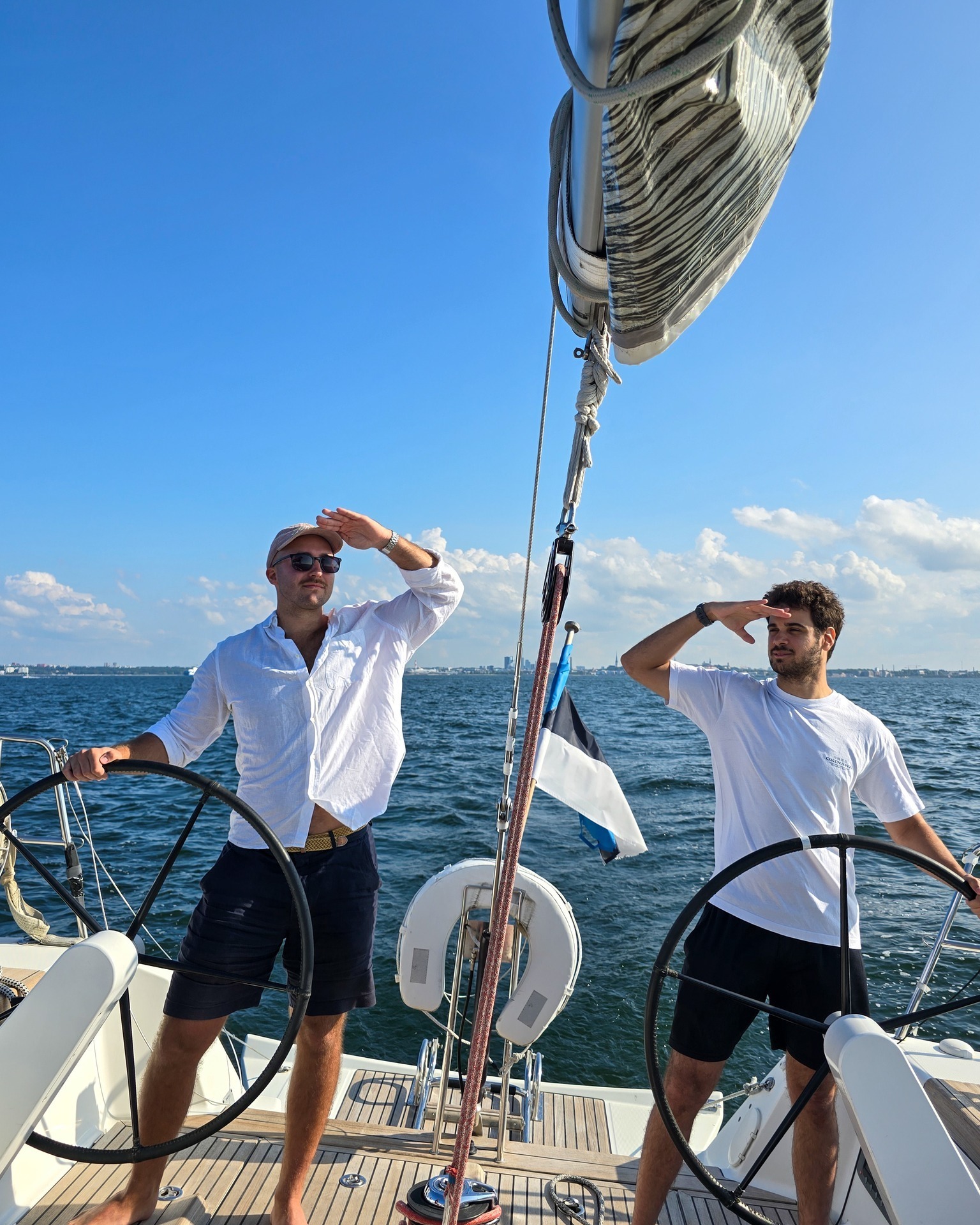
Public ferries run only May–October, mostly at weekends, two or three times a day, with crossings from Tallinn taking around 30 minutes to an hour. That thin schedule is exactly why arriving by private yacht is so appealing: we sail you across Tallinn Bay and anchor in a sheltered cove, so you set your own pace ashore — three marked hiking routes run 8–11 km — then return to the boat for lunch on deck.
Nature park with Soviet military ruins; 3 hiking routes, 8–11 km
Public ferry May–Oct, weekends only, ~30 min–1 hr — or sail with us
No shops on the island: bring water and food
Tip: spring for wildflowers, July for berries, autumn for mushrooms
Small island near Tallinn · ferry ~20 min · Tallinn Bay, half a day
Aegna
Tiny, tranquil Aegna sits just three kilometres off the Viimsi peninsula and makes the easiest island escape from Tallinn. Barely 3 km², it’s a mosaic of pine forest, sandy shore, giant erratic boulders and quiet nature trails, laced with faint traces of its coastal-defence past.
The high-speed catamaran reaches Aegna from Tallinn’s Linnahall harbour in about 20 minutes, running roughly May to October on most days except Tuesdays, with only around 100 seats — so book ahead in summer. A single well-marked loop trail circles much of the island, perfect for a half-day of walking and a swim.
Ferry from Linnahall harbour ~20 min; ~100 seats, book ahead
Living fishing island · ferry ~1 hr · off Viimsi, 1 day
Prangli
Where Aegna and Naissaar are largely empty, Prangli is a genuine, inhabited fishing island — a small year-round community that has kept its traditions, wooden chapel and coastal-village character. It offers a glimpse of old Estonian island life that has vanished elsewhere.
The ferry Wrangö sails from Leppneeme harbour (near Tallinn) and takes about an hour, running several times a day in the April–October season and less often in winter. Local operators run day tours with vintage Soviet-truck rides, a guide and lunch. Rent a bike on arrival to reach the beaches and lighthouse.
Ferry Wrangö from Leppneeme ~1 hr; several daily April–October
Getting to the harbour: ~30–40 min drive/bus from central Tallinn
Tip: buy ferry tickets for every passenger, including children
An inhabited island — respect local homes and privacy
Medieval fortress · museum ticket · Saaremaa, half a day
Saaremaa — Kuressaare Castle
The moated Kuressaare Episcopal Castle is the best-preserved medieval fortress in the Baltics and the anchor of any Saaremaa visit — a squat, mighty limestone stronghold begun in the 14th century, ringed by ramparts and a park.
Inside is the Saaremaa Museum, covering island history and nature. Summer hours (15 May–15 Sept) are daily 10:00–18:00; in winter it opens Wednesday to Sunday, 11:00–18:00, with the ticket office closing at 17:30. Climb the towers and cross the drawbridge, then relax in the surrounding spa-town of Kuressaare.
Meteorite site · crater free; museum fee · Saaremaa, 1–2 hrs
Saaremaa — Kaali meteorite crater
Around 3,500 years ago a meteorite slammed into Saaremaa, blasting a field of nine craters — the main one a near-perfect water-filled bowl about 110 m across. Kaali is one of the few large meteorite craters formed in a populated area, and it wove itself into Nordic myth and Bronze Age ritual.
Walking to the rim of the main crater is free; the adjacent Kaali visitor centre and Meteoritics & Limestone Museum explains the impact and displays island fossils. It’s about 18 km from Kuressaare, reachable by local bus, and open daily (roughly 9:00–20:00 in summer, shorter hours in winter).
Main crater free to visit; museum a small entry fee
Open daily; summer ~9:00–20:00, winter ~10:00–18:00
Getting there: ~18 km from Kuressaare, local buses available
Tip: combine with Angla windmills and Panga cliff on a north-loop day
Historic windmills · small fee · N Saaremaa, ~1 hr
Saaremaa — Angla windmills
A postcard symbol of the island, the Angla Windmill Hill lines up five wooden windmills against the sky — four classic Saaremaa trestle post mills from the early 20th century and one taller Dutch-style smock mill from 1927. It’s the best-preserved windmill group in Estonia.
The adjoining heritage culture centre offers milling demonstrations, craft workshops, a café and seasonal events, and you can climb inside the restored mills. It sits on the road between Kuressaare and the north coast, making it an easy pairing with Kaali crater and Panga cliff.
Five historic mills; small entry fee to the heritage centre
Getting there: on the Kuressaare–north coast road, own transport easiest
Tip: combine with Kaali and Panga in a single north-Saaremaa loop
Café and craft workshops open in the summer season
The north coast’s Panga cliff (Panga pank) is Saaremaa’s highest coastal bluff, a limestone wall rising over 20 metres above the Baltic and running roughly 2.5 km along the shore. It’s a dramatic, wind-scoured spot that once served as a place of pagan sacrifice.
It’s free and open around the clock, and the wide sea horizon makes it one of the island’s finest sunset viewpoints. Mind the unfenced edge — the drop is real. Pair it with Angla and Kaali to complete a classic northern-Saaremaa circuit.
Free, always open; cliff up to ~21 m high, ~2.5 km long
Getting there: north coast of Saaremaa; own transport needed
Tip: come at sunset for the best light over the sea
The island of Muhu guards Koguva, one of the best-preserved traditional villages in all Estonia — thatched cottages, juniper-fringed lanes, stone field walls and moss-covered wells, all wonderfully intact and lived-in.
The open-air Muhu Museum centres on the Tooma farm, boyhood home of writer Juhan Smuul, and shows off the island’s dazzling folk costumes, a village schoolhouse and authentic farm buildings. Because the Virtsu ferry lands on Muhu first (~27 min), Koguva is an easy first or last stop on any Saaremaa trip.
Muhu Museum entry a small fee; open in the summer season
Getting there: Virtsu–Kuivastu ferry ~27 min lands on Muhu
Tip: Muhu links to Saaremaa by causeway — do both in one trip
Historic lighthouse · small fee · W Hiiumaa, 1–2 hrs
Hiiumaa — Kõpu lighthouse
Rising from a wooded ridge on Hiiumaa’s western tip, Kõpu lighthouse is one of the oldest continuously operating lighthouses in the world, its distinctive buttressed stone tower dating to the early 1500s. It has guided ships past the treacherous Hiiu shoals for five centuries.
You can climb the tower in the warm season for a small fee and a fine view over the forests and sea; a single combined ticket covers all three of Hiiumaa’s lighthouses (Kõpu, Tahkuna and Ristna). Reach Hiiumaa via the Rohuküla–Heltermaa ferry (about 1 hr 15 min), then drive west.
Tower open in the warm season; small entry fee
Combined ticket covers all three Hiiumaa lighthouses
Getting there: Rohuküla–Heltermaa ferry ~1 hr 15 min, then drive
UNESCO cultural island · ferry ~1 hr, ticket ~€4–€6 · Gulf of Riga, 1–2 days
Kihnu
Tiny Kihnu is a living museum of a matriarchal island culture where women in striped red skirts still ride motorbikes with sidecars, and folk songs, dances, crafts and handicrafts endure. The Kihnu Cultural Space was proclaimed a UNESCO Masterpiece of Intangible Cultural Heritage in 2003.
The ferry Kihnu Virve sails year-round from Munalaid harbour (about 40 km from Pärnu), 3–4 times a day, taking around an hour; foot tickets are inexpensive (roughly €4–€6) but should be booked ahead in summer. Rent a bike or hop on a sidecar tour to circle the small, flat island.
UNESCO Cultural Space (2003); year-round Munalaid ferry ~1 hr
Foot-passenger tickets ~€4–€6; book ahead in summer
Getting to Munalaid: ~40 km / ~45 min from Pärnu
Tip: rent a bicycle on arrival to explore the island
Coastal-Swedish island · ferry ~45 min · off Haapsalu, 1 day
Vormsi
Estonia’s fourth-largest island, Vormsi, carries a distinctive Coastal-Swedish heritage: its historic Swedish-speaking community left behind wheel-shaped stone crosses in the churchyard of St. Olaf’s and a gentle, low-key landscape of juniper meadows and quiet shores.
The car-and-passenger ferry Ormsö crosses from Rohuküla harbour near Haapsalu in roughly 45 minutes; reserve early in summer, when thousands head for the island. Sviby harbour also welcomes visiting sailboats. Bring a bike — Vormsi is flat, sleepy and made for pedalling.
Ferry Ormsö from Rohuküla ~45 min; book ahead in summer
Getting to Rohuküla: ~1.5 hr drive from Tallinn via Haapsalu
Tip: rent or bring a bike — the island is flat and quiet
See the wheel-cross graveyard at St. Olaf’s church
Marine national park island · pre-booked boat · off W Saaremaa, 1 day
Vilsandi
Vilsandi National Park, established in 1910, is Estonia’s oldest protected area and its most marine — a scatter of some 160 islets and reefs off Saaremaa’s west coast, prized for seabirds, seals and wild, windswept solitude.
The main island of Vilsandi is remote: a local boat runs from Papissaare harbour (under 45 minutes’ drive from Kuressaare), and you must check the schedule and buy tickets in advance. At very low water it’s sometimes possible to wade across, but plan carefully — this is a place for well-prepared, nature-minded travellers.
Estonia’s oldest (1910) and most marine national park
Access by pre-booked boat from Papissaare; check schedule first
Getting to Papissaare: under 45 min drive from Kuressaare
Tip: bring everything you need — facilities are minimal
With more than 2,000 islands, Estonia offers something for every mood. For a quick escape from Tallinn, pick Aegna (easy, 20 min), Prangli (living fishing culture) or Naissaar (wild, with Soviet ruins). For a fuller island holiday, the big western islands — Saaremaa, Hiiumaa and Muhu — deliver castles, lighthouses and spa towns over several days.
Chasing culture and tradition? Kihnu (UNESCO) and Vormsi (Coastal-Swedish heritage) are unmatched. For raw nature and birdlife, remote Vilsandi rewards the well-prepared. Match ferry seasons and schedules to your dates — many small-island boats run only May–October and sell out on summer weekends — or skip the timetable entirely and reach them under sail.
Day trips from Tallinn: Aegna, Prangli, Naissaar
Multi-day island holiday: Saaremaa, Hiiumaa, Muhu
Culture: Kihnu (UNESCO), Vormsi; wild nature: Vilsandi
Tip: check ferry seasons — many small-island boats run only May–Oct
The ferry timetable is the biggest constraint on island-hopping — small boats sail only a few times a day, often just at weekends, and sell out in summer. Under sail, the islands off Tallinn open up on your schedule, weather allowing, with the freedom to anchor in a quiet bay for a swim.
Starting from Tallinn Bay, we can shape a day around Naissaar, Aegna or a simple coastal cruise, handling the sailing while you enjoy the deck. It’s the calmest, most private way to reach the nearby islands — and the approach from the water, with the Old Town shrinking behind you, is half the pleasure.
Reach the Tallinn-Bay islands on your schedule, not the ferry’s
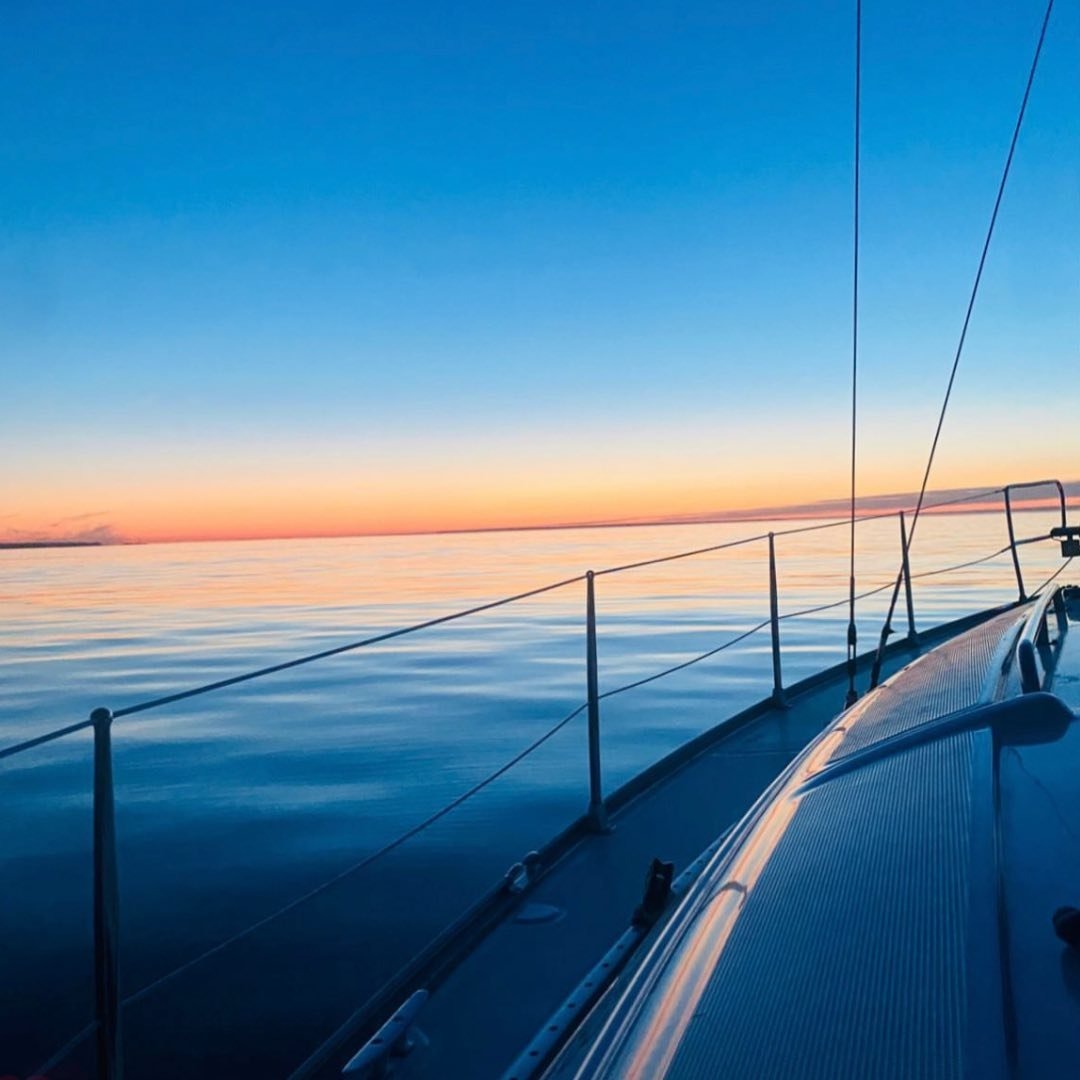
Anchor in a sheltered cove for a swim or lunch on deck
Tip: ask us to build a day around Naissaar or a coastal cruise
Because Naissaar’s public ferries run weekends only, May–October, arriving by private yacht transforms the trip. We sail you the short hop across Tallinn Bay and anchor in a sheltered cove, so you go ashore when it suits you rather than racing a two-a-day timetable.
Wander the Soviet mine depot, the narrow-gauge railway and the lighthouse, then come back aboard for lunch on the water. With no shops on the island, the yacht becomes your basecamp — a relaxed, unhurried way to experience Naissaar’s wild forests and empty beaches without the weekend crowds.
Sail direct from Tallinn — no weekend-only ferry to chase
The yacht is your basecamp: there are no shops on the island
Tip: pair Naissaar with a swim stop for a full day on the water
More than 2,000, though most are tiny and uninhabited. About a dozen are worth visiting, from a 30-minute speedboat hop to overnight ferry adventures.
Which Estonian island is best to visit?+
Saaremaa for a first visit — windmills, dolomite cliffs, a meteorite crater and a medieval castle. For quiet nature choose Hiiumaa; for the easiest trip from Tallinn, Naissaar.
How do you get to Naissaar?+
By boat from Tallinn — about two hours by sailing yacht or thirty minutes by speedboat. We run both, turning the journey into part of the day.
Can you visit Estonian islands as a day trip?+
Naissaar and Aegna work well as day trips from Tallinn. Saaremaa and Hiiumaa are large and far enough that they really deserve at least an overnight.
When can you visit the Estonian islands?+
Mainly summer, roughly June to September, when ferries and boats run and the weather cooperates. Naissaar by private boat is best in the mid-May to mid-September season.
The islands are best reached the old way — by boat.
From a half-day Naissaar trip to a sail across the bay, we will get you out among the Estonian islands. Tell us where you want to go and we will plan it.